General Electric monogramGE Heritage Village
GE Heritage Village bulb logo

GE STEM Lab · Student course

Plastics & Polymers

Describe repeating units and compare thermoplastics with thermosets.

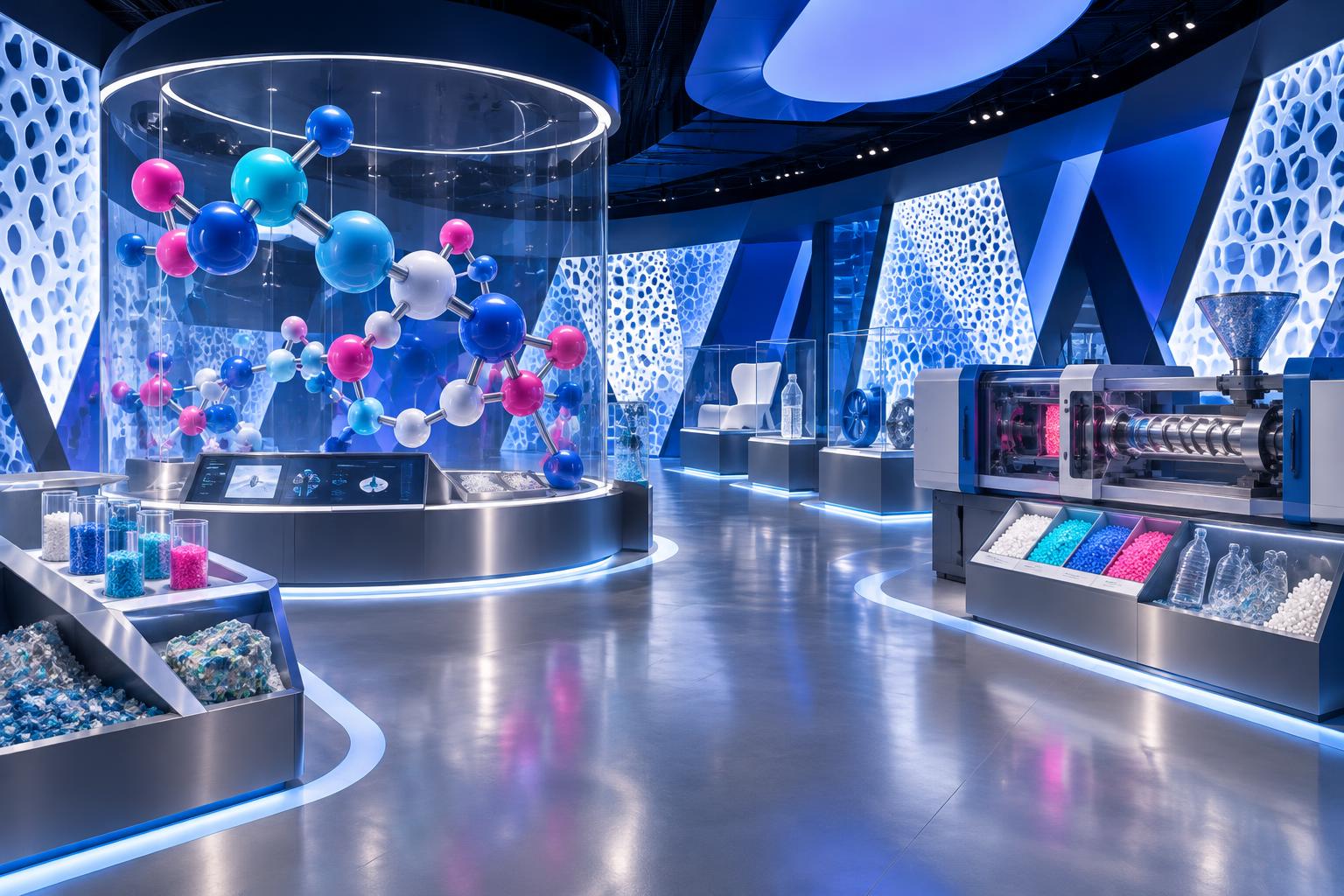
Original imagined learning zone · AI-assisted concept art, not a real GE facility.

Labeled system diagram · Plastics & Polymers
1234Simplified repeating-unit bead modelChains + cross-links influence behaviour
  1. 1

    Monomer units

    Small starting molecules can be linked through chemical reactions.

  2. 2

    Repeating chain

    The model shows repeating units in a simplified polymer chain.

  3. 3

    Cross-links

    Connections between chains can create a network.

  4. 4

    Structure & behaviour

    Chain arrangement, bonding and temperature influence properties; circles are an analogy, not an atomic formula.

Original simplified teaching schematic—not to scale, an installation guide, a historical artifact or a complete technical blueprint.

🧬 HALL COURSE · 4 COMPLETE LESSONS

Plastics & Polymers · learning syllabus

Describe repeating units and compare thermoplastics with thermosets. GE sold its Plastics business to SABIC in 2007. This is former-GE heritage, not a current GE business.

Suggested 100 minutes · foundation explanations → worked examples → interactive experiments

Chemistry · Polymers · 20 suggested minutes

01 · Atoms, molecules and polymer chains

Learning objective: Describe monomers and polymers using a structure model.

Atoms are the building blocks of chemical elements. Molecules contain atoms bonded together. A polymer is a large molecule made from many repeating units. A monomer is a small molecule that can participate in forming a polymer. Not every polymer is a manufactured plastic: proteins and cellulose are examples of naturally occurring polymers.

In addition polymerisation, suitable unsaturated monomers join without producing a small-molecule by-product. Ethene has a carbon–carbon double bond; its polymer is poly(ethene), with repeating –CH₂–CH₂– units. The double bond is changed as units link, and the atoms must still be accounted for. The drawn repeat unit is not a whole finished molecule.

The hall’s bead chain is an analogy for repeating units, not a scale drawing of bonding or a recipe for chemical synthesis. Chain length, composition and arrangement influence properties. Use paper diagrams only; never melt, burn or chemically process plastics for this lesson.

Worked example · follow the reasoning

A simplified chain with 100 repeating units contains 100 repeats, not 100 separate polymer molecules. If each repeat has relative mass 28, the repeat contribution is approximately 2800; end groups are excluded in this simple example.

Common misconception

All plastics contain polymers, but not every polymer is a plastic or synthetic material.
Chemistry · Structure–property relationships · 25 suggested minutes

02 · Structure, properties and plastic families

Learning objective: Compare thermoplastics and thermosets without oversimplifying recycling.

Thermoplastics generally soften when heated and can be reshaped under appropriate processing conditions. Their chains are not joined into the same permanent extensive network characteristic of a cured thermoset. Thermosets have cross-linked structures and do not simply remelt like thermoplastics; strong heating can cause decomposition.

Chain interactions, cross-links, crystallinity and additives affect stiffness, temperature response and toughness. A flexible polymer is not necessarily weak in every sense. Reinforcement can change performance but also complicate processing or recycling. The material name alone may not specify the properties of a particular product formulation.

Choose a material according to the required service conditions. A kitchen handle, packaging film and electrical insulation have different demands. Avoid treating “plastic” as one substance. Compare evidence for named properties while keeping real product safety and processing under professional control.

Worked example · follow the reasoning

If design A requires repeated reshaping during manufacturing and design B requires a stable cured network, thermoplastic and thermoset families suggest different routes. This does not identify a safe material without temperature and other specifications.

Common misconception

Thermoplastic does not mean every item is easily recyclable in every local collection system.

Mathematics · Ratios; polymer enrichment · 25 suggested minutes

03 · Mass, proportions and manufacturing

Learning objective: Calculate proportions in fictional material batches.

A formulation specifies the proportions of its components. Percentages are shares of a whole; they must be interpreted consistently by mass, volume or another basis. A classroom batch described as 10% additive by mass has additive mass equal to 0.10 times total batch mass. Do not confuse 10% of the total with 10% added on top of the original polymer mass.

Moulding forms some materials into shapes, but temperature, pressure and time depend on the material and method. Cooling, shrinkage and tolerances matter. The classroom can analyse a fictional process diagram without giving real processing instructions. GE’s former Plastics business history is separate from general polymer chemistry and from current ownership.

For calculation practice, define total mass and composition before computing. Check that all component masses sum to the total and that percentages sum to 100%. An accurate calculation does not make a formulation safe or suitable. Treat numbers here as invented classroom data, not an industrial recipe.

Worked example · follow the reasoning

A fictional 200 g batch with 5% additive by mass contains 10 g additive and 190 g other material. 10 / 200 × 100 = 5%. This is arithmetic only, not a mixing activity.

Common misconception

Percent by mass and percent by volume are not interchangeable without information about density.

Chemistry · Environmental applications · 30 suggested minutes

04 · Polymer lifecycles and environmental evaluation

Learning objective: Evaluate reuse, recycling and waste with qualified evidence.

A product’s lifecycle includes raw material sourcing, manufacture, transport, use and end-of-life handling. Durability can reduce replacement, but persistent waste can also create problems. Recycling needs appropriate collection, sorting and compatible processing. Contamination, mixtures and additives can reduce the usefulness of recovered material.

Biodegradable describes degradation under specified biological conditions; it does not automatically mean rapid breakdown in the sea or a home compost bin. A recycling symbol can identify material type without proving local collection accepts the product. Reducing unnecessary use and reusing suitable items are also strategies.

For an evaluation, compare alternatives for the same function and identify where evidence is missing. GE completed the sale of its Plastics business to SABIC in 2007; this hall preserves a former-business connection, not a current GE ownership claim. Chemistry lessons explain general principles rather than authenticate a pictured product.

Worked example · follow the reasoning

A fictional product used 20 times instead of once spreads its manufacturing impact over more uses, but washing, transport and eventual disposal must also be included in a comparison. Counting uses alone is not a full lifecycle assessment.

Common misconception

Biodegradable does not mean an item has no environmental impact in every setting.

VISUAL SCIENCE NOTEBOOK

Plastics & Polymers · how the system works

Process 1 · Monomers → Polymer chain
01Monomers
02Bond formation
03Repeating units
04Polymer chain
Process 2 · Structure → Product choice
01Structure
02Chain interactions
03Properties
04Product choice
Process 3 · Raw materials → Reuse / recycling
01Raw materials
02Manufacture + use
03Collection + sorting
04Reuse / recycling

Process icons are conceptual symbols. Arrows show a selected energy, information or reasoning pathway—not scale, physical component positions or a complete engineering schematic. Use the lesson text and sources for the assumptions.

WATCH · PAUSE · EXPLAIN

Educational video lessons

CrashCourse

The Polymer Explosion: Crash Course Engineering #20

CrashCourse · metadata checked November 8, 2026

Monomers, chains, properties and uses.

Watch on YouTube

Third-party lessons, not GE Heritage Village productions or partnerships. Loading a player connects to YouTube; external videos may contain advertising or become unavailable. Metadata checks identify the selected video, not certification of every statement. Original lesson sources remain the reference for calculations.

Young scientists · ages 8–12 with an adult

Plastics & Polymers

GE sold its Plastics business to SABIC in 2007. This is former-GE heritage, not a current GE business.

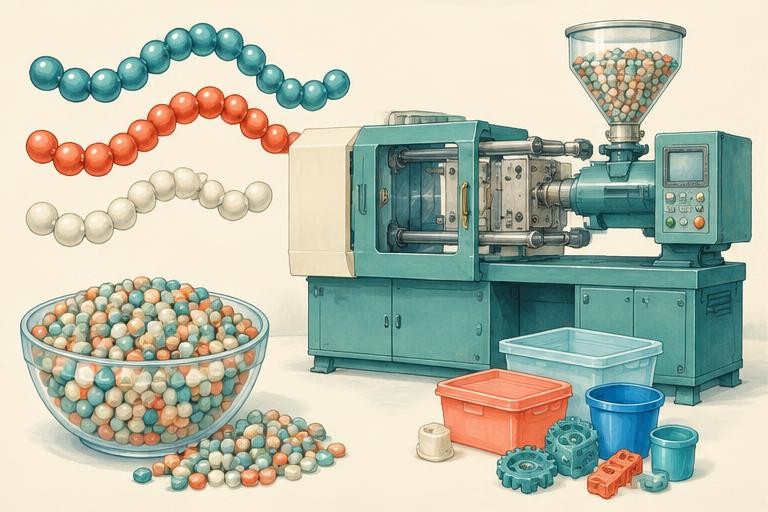
Original educational illustration: Plastics & Polymers

Original AI-assisted educational illustration · numbered concept markers, not exact component locations or a technical blueprint.

Many small building blocks connect into long molecules. The bead chain is an analogy, not a molecular-scale model.

Build a polymer chain

●—●—●—●—●
Generally softens with heat and can be reshaped under suitable conditions.

Beads are a repeating-unit analogy. Chain count alone cannot predict real material properties.

The science behind it

Polymers are large molecules made from repeating units. Structure affects properties; not every polymer is a plastic.

Virtual chemistry only. Never melt or burn plastics; fumes and heat can be dangerous.

How things work · exploration library

Computing

How a CPU follows instructions

A processor follows machine instructions that operate on data. Conceptually, it fetches an instruction, decodes it and performs an operation. Modern processors overlap many operations, but an instruction set still defines what the machine can do. A CPU is not a tiny person making decisions.

Original explanation. For evidence and further reading, open the corresponding hall’s science references.

Science tutor

AI can make mistakes; check the lesson’s sources. Don’t share personal information. This conversation is not saved and disappears when you leave the page.

What would you like to understand about this science hall?

Original teaching materials and AI-assisted concept pictures. Selected IGCSE-style topics and engineering enrichment, not a complete accredited examination course. Volunteer education project, not official GE.

References & further reading

Selected syllabus references

Original British IGCSE-style lessons based on selected subject areas, not a complete exam course, official mapping of every objective, or Cambridge-endorsed material. Core/Supplement and Core/Extended requirements vary. MRI reconstruction, turbine cycles and specialist engineering are application enrichment beyond the underlying school topics. Check the current official syllabus for examination requirements. Video metadata identifies third-party lessons; it does not certify every spoken claim or license downloads.