
General Electric monogramGE Heritage Village
GE Heritage Village bulb logo

GE STEM Lab · Student course

Robotics & Artificial Intelligence

Create a simple sensor rule and distinguish programmed decisions from machine learning.

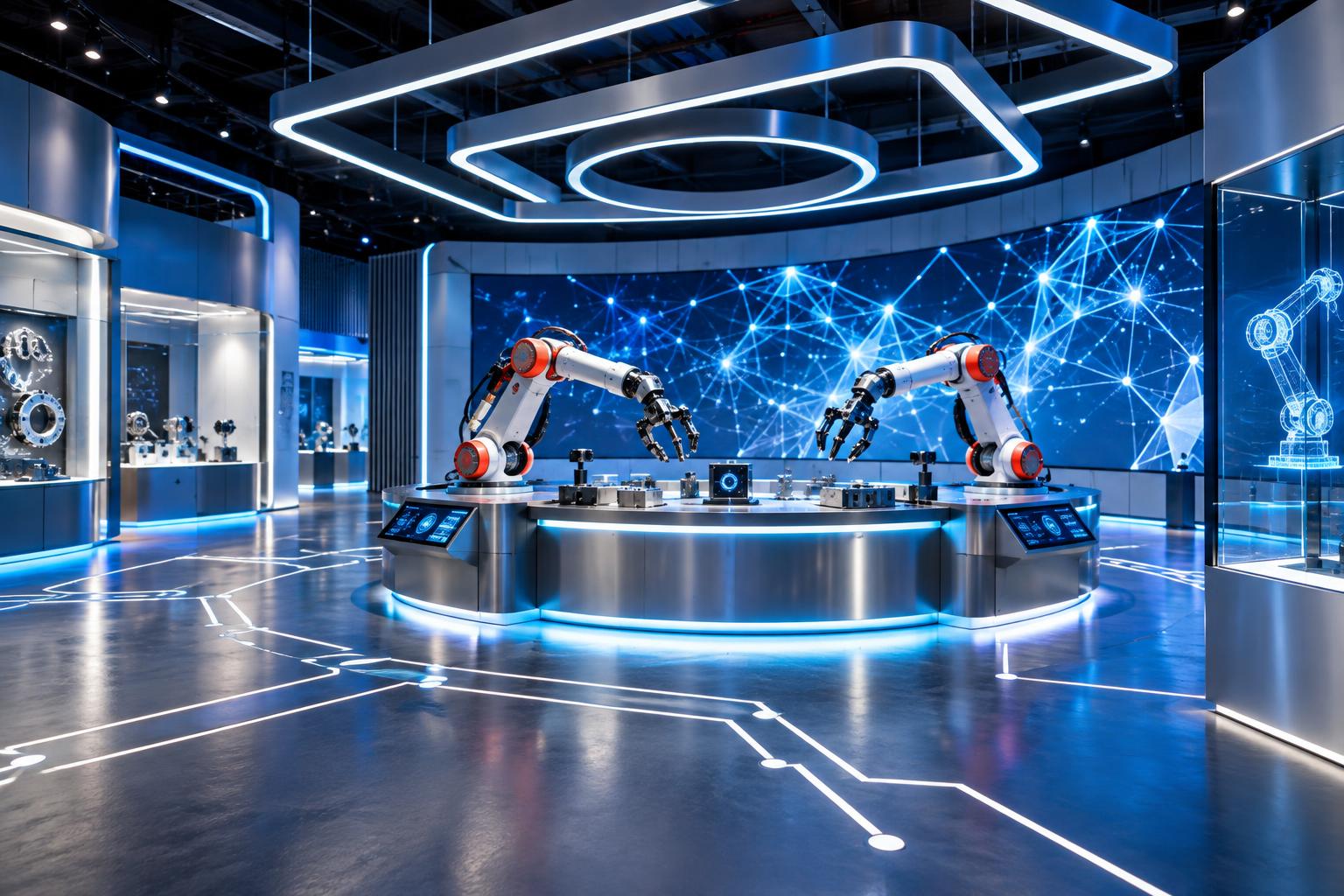
Original imagined learning zone · AI-assisted concept art, not a real GE facility.

Labeled system diagram · Robotics & Artificial Intelligence
1234ObstacleMeasure → compare → act → measure again
  1. 1

    Distance sensor

    Measures the distance to an obstacle; readings can be uncertain.

  2. 2

    Controller

    Validates readings and compares them with a stop threshold.

  3. 3

    Actuator

    A motor converts the command into physical movement.

  4. 4

    Feedback

    New measurements are returned to the controller; this is a rule-based system, not trained AI.

Original simplified teaching schematic—not to scale, an installation guide, a historical artifact or a complete technical blueprint.

🤖 HALL COURSE · 4 COMPLETE LESSONS

Robotics & Artificial Intelligence · learning syllabus

Create a simple sensor rule and distinguish programmed decisions from machine learning. Automation teams combine sensors, software and actuators in manufacturing and other fields.

Suggested 100 minutes · foundation explanations → worked examples → interactive experiments

Computing · Automated systems · 20 suggested minutes

01 · Sensors, data and feedback

Learning objective: Describe input–process–output and explain feedback.

A sensor measures a physical condition and provides data. A controller processes that data using an algorithm. An actuator produces a physical action, such as a motor changing speed. This input–process–output chain helps explain a robot without suggesting it has human thoughts. Feedback occurs when measurements of the system influence later action.

A threshold controller compares a measurement with a chosen value. For example, if distance is below 20 cm, command a stop. The virtual robot follows a rule; changing the threshold changes the rule’s condition. Sensor resolution, delays, noise and missing readings affect a real design. A comparison sign matters: “less than” differs from “less than or equal to”.

A controller needs a specified response to invalid data, not just the happy path. An emergency-stop system is a separate safety concern. The virtual stop rule cannot prove a real robot will avoid collision; real stopping also depends on speed, braking capability, latency and many other factors.

Worked example · follow the reasoning

For the condition distance < 20 cm, a reading of 19 cm triggers stop and 20 cm does not. With distance ≤ 20 cm, both trigger stop. Testing the boundary checks the actual rule.

Common misconception

A sensor reading is not automatically correct, and a threshold rule does not guarantee safety.
Computer Science · Programming · 25 suggested minutes

02 · Algorithms, selection and iteration

Learning objective: Trace a precise algorithm using sequence, selection and repetition.

An algorithm is a finite, precise description of steps for a task. Sequence gives order, selection chooses between paths and iteration repeats steps. Pseudocode describes logic without depending on one programming language. Variables hold values that can change; a Boolean expression evaluates to true or false.

A control loop might read a sensor, validate the result, compare it with a threshold and select an action, then repeat. Order matters: acting on a reading before checking it could produce a wrong decision. A flowchart uses standard shapes to show actions and decisions, but the meaning still depends on clear labels and conditions.

Dry-run an algorithm by tracing values in a table rather than guessing. Use normal, boundary and invalid inputs. State how a loop ends; a program that should finish needs a termination condition. A continuously running controller is different, but still requires a safe way to stop or handle failure.

Worked example · follow the reasoning

Pseudocode: IF reading is invalid THEN command STOP ELSE IF reading < 20 THEN command STOP ELSE command MOVE. A missing reading follows the first branch; 25 follows MOVE; 10 follows STOP.

Common misconception

An algorithm is more than a vague aim such as “avoid obstacles”; its steps and conditions must be precise.

Computer Science · AI applications · 25 suggested minutes

03 · Machine learning and responsible AI

Learning objective: Distinguish a trained model from a programmed rule and evaluate its output.

A rule-based system follows conditions chosen by a programmer. A machine-learning model fits patterns using training examples and then applies those patterns to inputs. It does not necessarily understand the subject as a person would. A system can combine rules and trained models; seeing an automated action alone does not identify which method is used.

Training data and testing data have different purposes. Testing on the same examples used to fit a model can give a misleading impression of performance on unfamiliar data. Distribution shifts, incomplete examples and biased labels can cause errors. Report which inputs were tested and what the evaluation measured.

Responsible use also considers privacy, fairness, accountability and human oversight. Avoid collecting names, images or personal details for a classroom AI exercise. Use fictional non-personal examples. The optional science tutor can help explain, but its answers can be wrong and should be checked against lesson sources.

Worked example · follow the reasoning

A classifier gets 90 of 100 labelled test cases correct: accuracy = 90%. This leaves 10 errors and does not tell whether the errors are concentrated in one group or one type of input.

Common misconception

Automation is not proof of intelligence, and a high average score is not a guarantee for every case.

Scientific skills · Test data and evaluation · 30 suggested minutes

04 · Testing an automated system

Learning objective: Plan normal, boundary and invalid tests with expected results.

A test plan states input, expected result, actual result and conclusion. Choose normal values, values on either side of a boundary and invalid or absent values. For a threshold rule, test the threshold itself: this reveals whether equality was intended. Decide the expected result before looking at the program’s output.

Change one relevant variable at a time when exploring the virtual rule. If speed, threshold and noise all change together, it becomes harder to identify why behaviour changed. Record assumptions such as immediate response and perfect sensors. Explain which assumptions would fail in physical equipment.

A successful classroom test demonstrates behaviour for those chosen cases, not a complete safety certification. Extend a diagram with a failure path and justify the selected safe classroom action. Never test moving industrial robots, put hands near mechanisms or treat this simulation as a certified control system.

Worked example · follow the reasoning

For distance < 20, a useful test set is 10 (stop), 19 (stop), 20 (move), 21 (move), 30 (move) and missing data (defined failure response). The missing-data case requires an explicit additional rule.

Common misconception

Passing six test cases does not establish that every possible real-world input is safe.

VISUAL SCIENCE NOTEBOOK

Robotics & Artificial Intelligence · how the system works

Process 1 · Sensor input → Actuator command
01Sensor input
02Validate reading
03Threshold comparison
04Actuator command
Process 2 · Training examples → Evaluate errors
01Training examples
02Fit model
03Separate test data
04Evaluate errors
Process 3 · Read distance → Read again
01Read distance
02Compare ≤ threshold
03Stop or move
04Read again

Process icons are conceptual symbols. Arrows show a selected energy, information or reasoning pathway—not scale, physical component positions or a complete engineering schematic. Use the lesson text and sources for the assumptions.

WATCH · PAUSE · EXPLAIN

Educational video lessons

CrashCourse

Robots: Crash Course Computer Science #37

CrashCourse · metadata checked November 8, 2026

Sensors, actuators and computer-controlled behaviour.

Watch on YouTube

Third-party lessons, not GE Heritage Village productions or partnerships. Loading a player connects to YouTube; external videos may contain advertising or become unavailable. Metadata checks identify the selected video, not certification of every statement. Original lesson sources remain the reference for calculations.

Young scientists · ages 8–12 with an adult

Robotics & Artificial Intelligence

Automation teams combine sensors, software and actuators in manufacturing and other fields.

Original educational illustration: Robotics & Artificial Intelligence→ Move

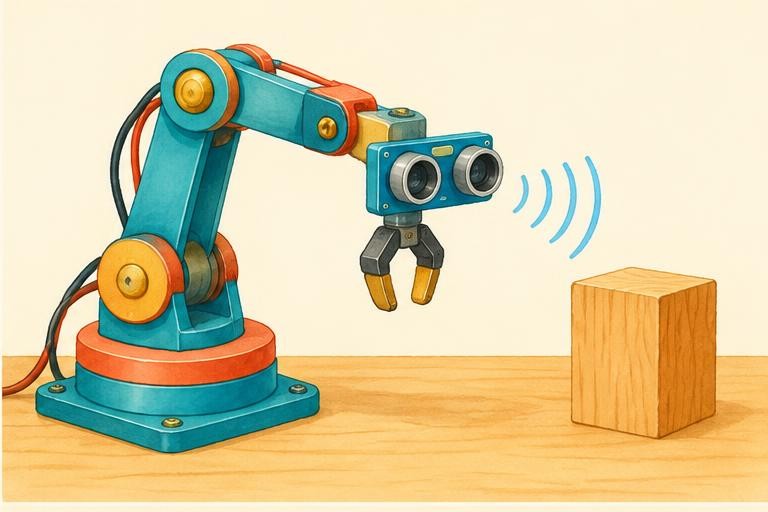
Original AI-assisted educational illustration · numbered concept markers, not exact component locations or a technical blueprint.

A sensor measures a condition such as distance. Real readings can be noisy or missing.

Teach a robot to stop

IF distance ≤ 30 cm: stop. Action: Move forward

Predict the action before moving the obstacle. A missing sensor reading should trigger a safe response, not be treated as a clear path.

The science behind it

Feedback control compares measurements with a desired condition. A threshold rule is not the same as a trained AI model.

Virtual robot only; never put hands near moving machinery.

How things work · exploration library

Computing

How a CPU follows instructions

A processor follows machine instructions that operate on data. Conceptually, it fetches an instruction, decodes it and performs an operation. Modern processors overlap many operations, but an instruction set still defines what the machine can do. A CPU is not a tiny person making decisions.

Original explanation. For evidence and further reading, open the corresponding hall’s science references.

Science tutor

AI can make mistakes; check the lesson’s sources. Don’t share personal information. This conversation is not saved and disappears when you leave the page.

What would you like to understand about this science hall?

Original teaching materials and AI-assisted concept pictures. Selected IGCSE-style topics and engineering enrichment, not a complete accredited examination course. Volunteer education project, not official GE.

References & further reading

Selected syllabus references

Original British IGCSE-style lessons based on selected subject areas, not a complete exam course, official mapping of every objective, or Cambridge-endorsed material. Core/Supplement and Core/Extended requirements vary. MRI reconstruction, turbine cycles and specialist engineering are application enrichment beyond the underlying school topics. Check the current official syllabus for examination requirements. Video metadata identifies third-party lessons; it does not certify every spoken claim or license downloads.